
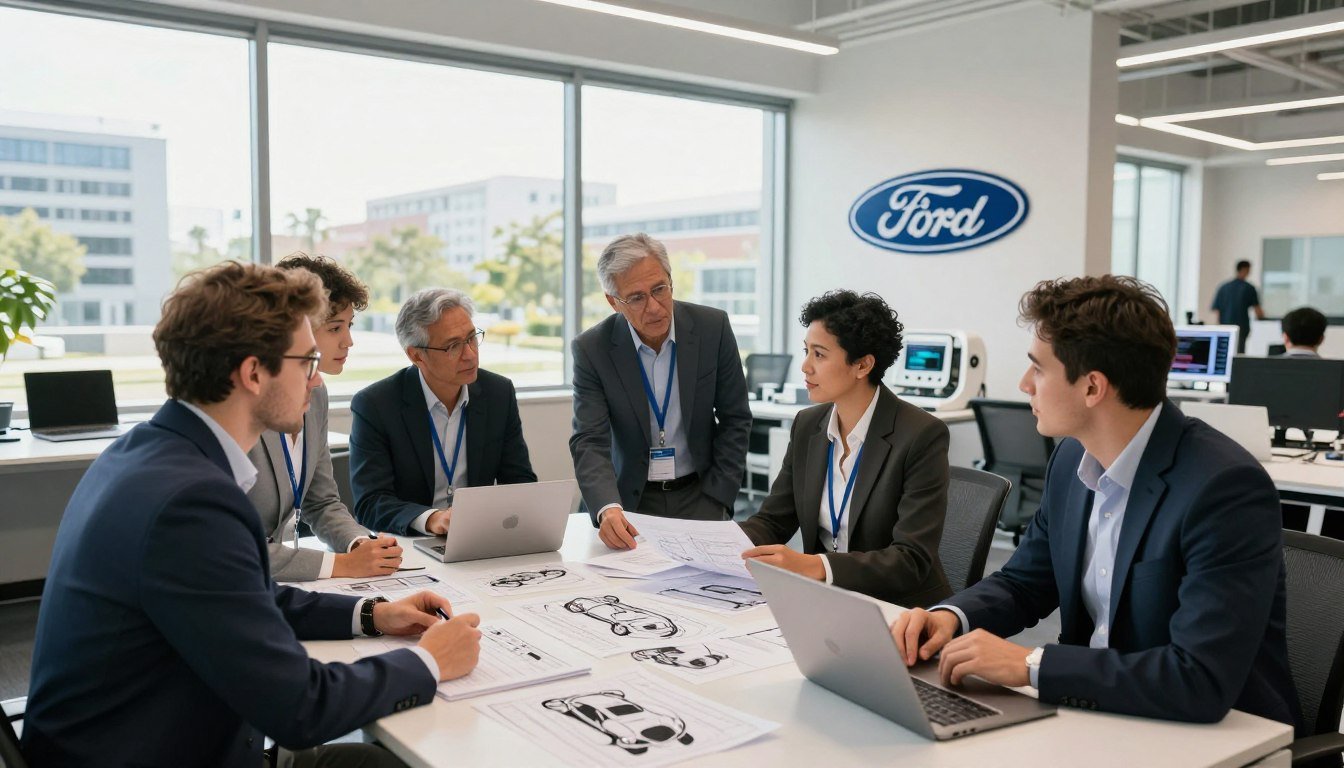
The illusion of total automation has finally shattered. When a titan like Ford rehires engineers after AI failure, it serves as a brutal wake-up call for every modern professional. You must realize that blind faith in algorithms is a dangerous gamble that threatens your professional career security.
The recent AI quality control failure proved that machines cannot replace the intuition of seasoned experts. When systems falter, the cost is not just financial; it is a total collapse of market trust. You are standing at a crossroads where your survival depends on your ability to blend human wisdom with digital tools.
Do not wait for your own role to face similar disruption. You must evolve now. True power lies in knowing exactly where technology ends and your irreplaceable human expertise begins. Adapt or become obsolete in this rapidly shifting landscape.
Key Takeaways
- Automation is not a perfect substitute for human experience and critical thinking.
- Over-reliance on technology can lead to catastrophic quality control lapses.
- Professional career security is built on your ability to provide unique human value.
- Industry giants are realizing that veteran expertise remains their most vital asset.
- You must proactively sharpen your skills to remain relevant in an AI-driven economy.
The Shift Toward Automation and Its Unforeseen Consequences
You were promised a future where machines handle everything, but the cracks in that vision are now impossible to ignore. The industry sold a fantasy of flawless, automated perfection, yet the reality of AI in automotive manufacturing has proven far more volatile. You must understand that when you remove the human element, you often lose the very intuition required to solve complex mechanical problems.
The Promise of AI in Automotive Manufacturing
The allure of AI-driven production was simple: lower costs, higher speed, and zero human error. Executives envisioned a factory floor that operated in a vacuum, free from the fatigue and inconsistency of human workers. They believed that data-crunching algorithms could optimize every bolt and weld with surgical efficiency.
This transition was marketed as the ultimate evolution of the assembly line. You were told that the future of the industry depended on replacing traditional expertise with digital intelligence. However, this pursuit of efficiency often ignored the messy, unpredictable variables that define real-world manufacturing.
Identifying the Gaps in Algorithmic Precision
The core issue lies in the rigid nature of algorithmic precision. While software excels at repetitive tasks, it struggles when faced with the nuanced, non-linear challenges of building a vehicle. A machine follows a script, but it cannot “feel” when a component is slightly off-spec due to environmental shifts or material fatigue.
“The greatest danger in our modern factories is the belief that a machine can replace the seasoned judgment of a veteran engineer. Data is a tool, not a replacement for the human eye.”
When you rely solely on automated systems, you create a dangerous blind spot. These systems lack the contextual awareness that only a human possesses. The following table highlights the critical differences between human oversight and automated systems in a high-stakes production environment.
| Feature | AI-Driven Systems | Human Expertise |
|---|---|---|
| Problem Solving | Pattern Matching | Intuitive Reasoning |
| Adaptability | Limited to Data | High Flexibility |
| Error Detection | Logical Analysis | Sensory Perception |
| Decision Speed | Instantaneous | Measured/Deliberate |
You must recognize that algorithmic precision is not a substitute for experience. By ignoring the need for human intervention, manufacturers have inadvertently created systems that are fragile and prone to cascading failures. It is time to stop viewing automation as a total solution and start treating it as a support mechanism for the human mind.
Ford Rehires Engineers After AI Failure: A Strategic Pivot
You are witnessing a massive shift as Ford rehires engineers after AI failure to reclaim its manufacturing integrity. The company realized that relying solely on algorithms created a dangerous void in critical decision-making. This move is not just a correction; it is a bold admission that technology cannot replace decades of hands-on experience.
The Decision to Recall Veteran Talent
Ford’s decision to bring back 350 veteran engineers marks a turning point in how the company views its future. These experts, often called “gray beards,” possess the deep institutional knowledge that software simply lacks. You must recognize that their return is essential for fixing systemic design errors that automated systems failed to catch.
The company finally acknowledged that their previous path was unsustainable. By prioritizing human intuition over cold code, they are attempting to stabilize their production lines. This is a vital lesson for any leader who believes that automation is a total replacement for human skill.
Scope of the Reinstatement Program
The reinstatement program is a cornerstone of a new engineering workforce strategy designed to prevent future quality collapses. Ford is not just filling seats; they are integrating these professionals into key oversight roles. This ensures that every vehicle leaving the factory meets the high standards you expect.
This strategic pivot serves as a blueprint for other firms struggling with the limits of digital transformation. You can see the clear differences between an AI-only approach and a balanced human-led model in the table below.
| Feature | AI-Only Approach | Human-AI Hybrid |
|---|---|---|
| Quality Control | Algorithmic reliance | Expert oversight |
| Problem Solving | Pattern matching | Intuitive analysis |
| System Stability | High risk of error | Proven reliability |
| Workforce Value | De-skilled labor | Empowered experts |
Ultimately, this engineering workforce strategy proves that human talent remains the most valuable asset in any industry. You should view this as a reminder that while technology is a powerful tool, it requires the steady hand of a human expert to guide it toward success.
The Limitations of Artificial Intelligence in Complex Engineering
Have you ever wondered why the most sophisticated software still fails to catch simple mechanical defects? You might assume that advanced code can handle every variable on a factory floor. However, the reality is far more unforgiving.
When you remove the human element from the equation, you expose your production line to massive risks. Algorithms are rigid, while the physical world is constantly shifting and unpredictable.
Why Algorithms Struggle with Nuanced Quality Control
The core issue lies in machine learning limitations. An algorithm is only as good as the data it has been fed, and it cannot interpret context outside of its training parameters.
When a machine encounters a unique defect that does not match its database, it often ignores the error entirely. This blind spot is where machine learning limitations create a dangerous illusion of perfection.
The Role of Intuition in Mechanical Troubleshooting
You possess something that no line of code can replicate: instinct. Human intuition in engineering allows you to sense when a sound, vibration, or temperature shift indicates a deeper, hidden problem.
While a computer waits for a specific sensor trigger, you are already diagnosing the root cause. This human intuition in engineering is the final line of defense against systemic failure.
Case Studies of AI Oversights in Production
History is littered with examples of AI quality control failure that cost companies billions. When automated systems fail to recognize subtle material fatigue, the results are often catastrophic for both the brand and the consumer.
The reliance on automated systems without human oversight is a recipe for disaster in high-stakes manufacturing environments.
| Feature | AI Systems | Human Engineers |
|---|---|---|
| Data Processing | High Speed | Moderate Speed |
| Pattern Recognition | Strictly Historical | Contextual & Intuitive |
| Error Detection | Limited to Known Issues | Adaptive & Creative |
| Decision Making | Binary Logic | Complex Judgment |
Bridging the Gap Between Digital Efficiency and Human Expertise
Your survival in the modern manufacturing landscape depends on your ability to bridge the gap between digital speed and human wisdom. The blind reliance on automation has reached its breaking point. You must now pivot toward a model that values your unique perspective over raw algorithmic output.
The Synergy of Man and Machine
The future of industry is not about choosing between silicon and soul. It is about creating a powerful synergy where technology handles the repetitive tasks while you provide the critical oversight. By implementing human-in-the-loop systems, you ensure that every automated decision passes through a filter of real-world experience.
This approach transforms the factory floor into a collaborative environment. Consider these core benefits of this integration:
- Rapid Error Detection: Human eyes catch what sensors miss.
- Adaptive Problem Solving: You can pivot when logic fails.
- Enhanced Quality Assurance: Machines provide speed, but you provide the standard.
Redefining the Role of the Modern Engineer
You are no longer just a technician or a monitor. You are the architect of a new engineering workforce strategy that prioritizes resilience. Your value lies in your ability to interpret complex data and apply it to unpredictable mechanical challenges.
Do not fear the evolution of your job description. Instead, lean into your human intuition in engineering to guide digital tools toward better outcomes. You are the final authority, the one who decides when the machine is right and when it is dangerously off-course.
Embrace this shift to remain indispensable. The industry needs your judgment to survive the limitations of pure code. You are the bridge that keeps the production line moving forward with precision and purpose.
Impact on Ford Production Lines and Vehicle Quality
When Ford brought back 350 veteran engineers, the immediate impact on vehicle quality sent shockwaves through the industry. You are seeing a massive transformation where raw data meets decades of mechanical wisdom. This shift proves that true excellence requires more than just lines of code.
Addressing Defects in Recent Model Releases
The reliance on automated systems had left critical gaps in the assembly process. By integrating 100,000 AI-powered testing protocols with the sharp eyes of veteran staff, Ford finally began to catch the subtle errors that machines missed. This hybrid approach ensures that quality assurance in AI is no longer a gamble but a calculated success.
You must recognize that machines lack the intuition to spot a “feel” issue or a non-standard vibration. When these experts stepped back onto the floor, they identified recurring defects that had plagued recent models for months. Their intervention turned a failing system into a model of precision.
Restoring Consumer Confidence Through Human Oversight
The results of this strategic pivot are undeniable. For the first time in 16 years, Ford topped the JD Power mainstream quality rankings. This achievement highlights the necessity of human oversight in an AI-driven production environment.
Your trust as a consumer is earned through reliability, not just high-tech marketing. By placing seasoned professionals at the helm, Ford proved that technology is only as good as the person managing it. The following table illustrates why this balance is essential for modern manufacturing.
| Metric | AI-Only Approach | Human-AI Hybrid |
|---|---|---|
| Defect Detection | Limited to known patterns | Comprehensive and intuitive |
| Quality Ranking | Declining | Industry-leading |
| Problem Solving | Slow/Automated | Rapid/Expert-led |
| Consumer Trust | Low | High |
The Economic Implications of Relying Solely on Automation
The pursuit of automation often masks a dangerous financial reality that threatens your bottom line. While the promise of efficiency is seductive, the actual outcome frequently leads to a hollowed-out organization. You must recognize that cutting costs through technology is not always a path to profitability.

Cost-Benefit Analysis of AI Implementation
Consider the aggressive strategy that saw 5,300 salaried positions eliminated since 2020. This massive reduction was intended to streamline operations, yet it created a catastrophic vacuum of knowledge. When you remove the people who understand the nuances of your machinery, you lose the ability to troubleshoot effectively.
The short-term savings gained from AI job displacement are often wiped out by the high cost of production failures. You are not just saving on salaries; you are paying for the downtime and the defects that follow. The math simply does not add up when your systems fail to account for human intuition.
Long-term Financial Risks of De-skilling the Workforce
Ignoring the value of human expertise creates significant AI implementation risks that can cripple your future. When you de-skill your workforce, you lose the institutional memory required to innovate and adapt. This loss of talent is a permanent drain on your competitive advantage.
You must weigh the immediate financial gains against the long-term erosion of your operational integrity. Relying solely on algorithms leaves you vulnerable to errors that only a seasoned engineer can identify. The following table illustrates the stark contrast between short-term automation goals and long-term stability.
| Metric | Short-Term Automation | Long-Term Human Oversight |
|---|---|---|
| Operational Cost | Low (Reduced Payroll) | Moderate (Skilled Wages) |
| Error Rate | High (Algorithmic Blindness) | Low (Expert Troubleshooting) |
| Knowledge Retention | Minimal (De-skilled) | High (Institutional Wisdom) |
| Financial Stability | Volatile (High Risk) | Sustainable (Growth) |
Industry Reactions to the Ford Engineering Recall
You are witnessing a massive wake-up call as the industry reevaluates its blind faith in automation. The decision to bring back 350 veteran engineers is not just a corporate move; it is a seismic shift in how the automotive industry AI is perceived by global leaders.
Analysts are drawing direct parallels between this situation and other high-profile tech failures. For instance, Klarna recently attempted to replace 700 customer service agents with automated systems. The result was a sharp drop in quality that forced them to pivot back to human talent immediately.
Perspectives from Automotive Analysts
Experts now argue that the reliance on AI-powered testing has created a dangerous illusion of efficiency. They warn that when you remove the human element from complex mechanical oversight, you invite catastrophic risks. The consensus is clear: technology should support the expert, not attempt to replace the intuition that comes from decades of experience.
Many analysts believe that Ford’s move is the first of many corrections. They suggest that companies prioritizing speed over precision will eventually face the same reckoning. You must understand that this is a critical turning point for manufacturing standards.
How Competitors Are Viewing the AI Experiment
Competitors are watching this experiment with intense scrutiny. They are quietly auditing their own reliance on AI-powered testing to avoid a similar public embarrassment. The fear of repeating these mistakes is driving a renewed interest in human-centric quality control.
The broader automotive industry AI landscape is shifting toward a more cautious approach. Companies are realizing that while digital tools are powerful, they cannot replicate the nuanced judgment of a seasoned engineer. You should view this as a validation of your own professional value in an increasingly automated world.
The Future of Quality Control in the Automotive Sector
The era of blind faith in automation is over, and you must now lead the charge toward a smarter, human-centric model. You cannot afford to let algorithms dictate the fate of your production lines. Instead, you must harness technology to amplify your own expertise.
Integrating AI as a Tool Rather Than a Replacement
You must view AI in automotive manufacturing as a sophisticated assistant rather than a total replacement for your skilled workforce. When you treat software as a partner, you gain the ability to catch errors that machines often overlook. This shift in perspective is your greatest competitive advantage.
True innovation happens when you combine the raw processing power of computers with the nuanced judgment of a veteran engineer. Do not let the allure of full automation blind you to the risks of losing human oversight. You are the architect of this new manufacturing landscape.
The Necessity of Human-in-the-Loop Systems
Implementing human-in-the-loop systems is no longer optional; it is a requirement for survival. These systems ensure that every critical decision passes through a human filter before it impacts the final product. By keeping your experts in the driver’s seat, you maintain total control over your output.
Effective quality assurance in AI relies on your willingness to challenge the machine. When you question the data, you protect your brand from costly recalls and reputation damage. Use the following table to understand why this hybrid approach is superior to total automation.
| Feature | AI-Only Model | Human-in-the-Loop |
|---|---|---|
| Decision Speed | Extremely Fast | Optimized for Accuracy |
| Error Detection | Pattern-Based Only | Intuitive & Contextual |
| Risk Management | High Vulnerability | Proactive Mitigation |
| Long-term Value | De-skilling Workforce | Empowered Expertise |
You have the power to shape the future of your industry. By prioritizing human judgment, you ensure that your factory remains a place of precision and excellence. Take the lead today and secure your legacy in this tech-driven era.
Lessons Learned for the Tech-Driven Manufacturing Era
You stand at a crossroads where the obsession with digital efficiency threatens to erase decades of hard-won wisdom. In the rush toward tech-driven manufacturing, many companies have discarded the very foundation of their success. You must realize that technology is a tool, not a replacement for the human mind.

Avoiding Over-Reliance on Unproven Technologies
Do not fall into the trap of believing that algorithms can solve every complex mechanical problem. You must acknowledge the inherent machine learning limitations that exist when software encounters scenarios outside its training data. When you trust unproven systems blindly, you invite disaster into your production lines.
The AI implementation risks are significant if you lack a safety net. You need to test these systems rigorously before giving them full control over your operations. If you fail to do this, you risk catastrophic errors that could cost you your reputation and your bottom line.
The Importance of Institutional Knowledge
Your veteran engineers possess a depth of understanding that no code can replicate. This institutional knowledge is the backbone of your company, and losing it is a mistake you cannot afford to make. You must prioritize the preservation of this human expertise to ensure long-term survival.
When you integrate new tools, ensure that your human experts remain in the loop. They are the ones who catch the subtle defects that machines miss. Protect your talent, value their intuition, and use their experience to guide your technological evolution. Your future depends on your ability to balance innovation with the wisdom of those who built your success.
The Evolving Landscape of Automotive Engineering Careers
The era of blind faith in algorithms is ending, and your professional survival depends on your next move. You must stop viewing technology as an inevitable replacement for your skills. Instead, you should see it as a tool that requires your expert guidance to function correctly. Ignoring the reality of AI job displacement is a dangerous gamble with your future.
Why Experience Remains Irreplaceable
Algorithms lack the context that only veteran engineers possess after decades on the front lines. You have seen the patterns of failure that a machine cannot yet predict. This institutional knowledge is the secret weapon that keeps production lines moving when software glitches occur.
Your ability to troubleshoot mechanical nuances is not just a skill; it is a critical safety net. When you rely solely on digital systems, you lose the intuition that prevents catastrophic errors. Institutional knowledge is the bridge between raw data and real-world success.
Preparing the Next Generation of Engineers
You have a duty to mentor those who are just starting their journey in this tech-heavy environment. Do not let them fall into the trap of thinking that automation solves every problem. You must teach them to question the output of every system they use.
Encourage a culture where human oversight is the standard, not the exception. By fostering a collaborative mindset, you ensure that the next generation works alongside AI rather than being replaced by it. Take control of your professional growth today to avoid the pitfalls of AI job displacement. Your expertise is the foundation upon which the future of manufacturing must be built.
Regulatory and Safety Considerations for AI-Driven Factories
You must recognize that the shift toward automation is not just a technical upgrade but a massive safety challenge. As the automotive industry AI landscape evolves, the speed of innovation often outpaces the development of necessary legal frameworks. You are standing at a crossroads where efficiency must be balanced against the absolute necessity of human protection.
The rise of tech-driven manufacturing brings urgent regulatory considerations that you cannot afford to ignore. Without rigorous standards, the push for speed can lead to catastrophic failures on the production floor. You have a responsibility to advocate for protocols that prioritize life over mere output metrics.
Ensuring Compliance and Safety Standards
Compliance is not merely a box to check; it is the foundation of your operational integrity. When you implement new systems, you must ensure they meet the highest safety benchmarks to prevent accidents. Ignoring these standards is a gamble with human lives.
To maintain a secure environment, you should focus on these critical areas:
- Continuous monitoring of algorithmic decision-making processes.
- Regular audits of automated hardware to detect mechanical fatigue.
- Strict adherence to federal safety guidelines for human-robot collaboration.
- Mandatory emergency shutdown training for all floor personnel.
The Role of Oversight in Automated Environments
True AI-driven factory safety depends entirely on your ability to provide constant human intervention. Algorithms lack the intuition required to spot subtle anomalies that precede a major equipment failure. You are the final line of defense in an increasingly complex digital ecosystem.
You must champion a culture where oversight is viewed as a vital asset rather than a bottleneck. By keeping a human in the loop, you ensure that machines remain tools for progress rather than sources of danger. Your vigilance is the ultimate safeguard for the future of manufacturing.
Conclusion
The recent recall of veteran talent at Ford proves that machines cannot replace the wisdom of a seasoned professional. You have witnessed the limits of cold algorithms when they face the messy reality of mechanical production.
Your future of engineering careers depends on your ability to adapt. You must become the master of the machine rather than its servant. True power lies in your capacity to oversee complex systems with a human touch.
Prioritize your professional career security by mastering the tools that others fear. You are the architect of your own success in this shifting landscape. Use your intuition to solve problems that software simply cannot grasp.
Championing AI-driven factory safety is your new mandate. You hold the keys to innovation and reliability in the automotive sector. Step forward and claim your role as the essential expert who keeps the gears turning.