
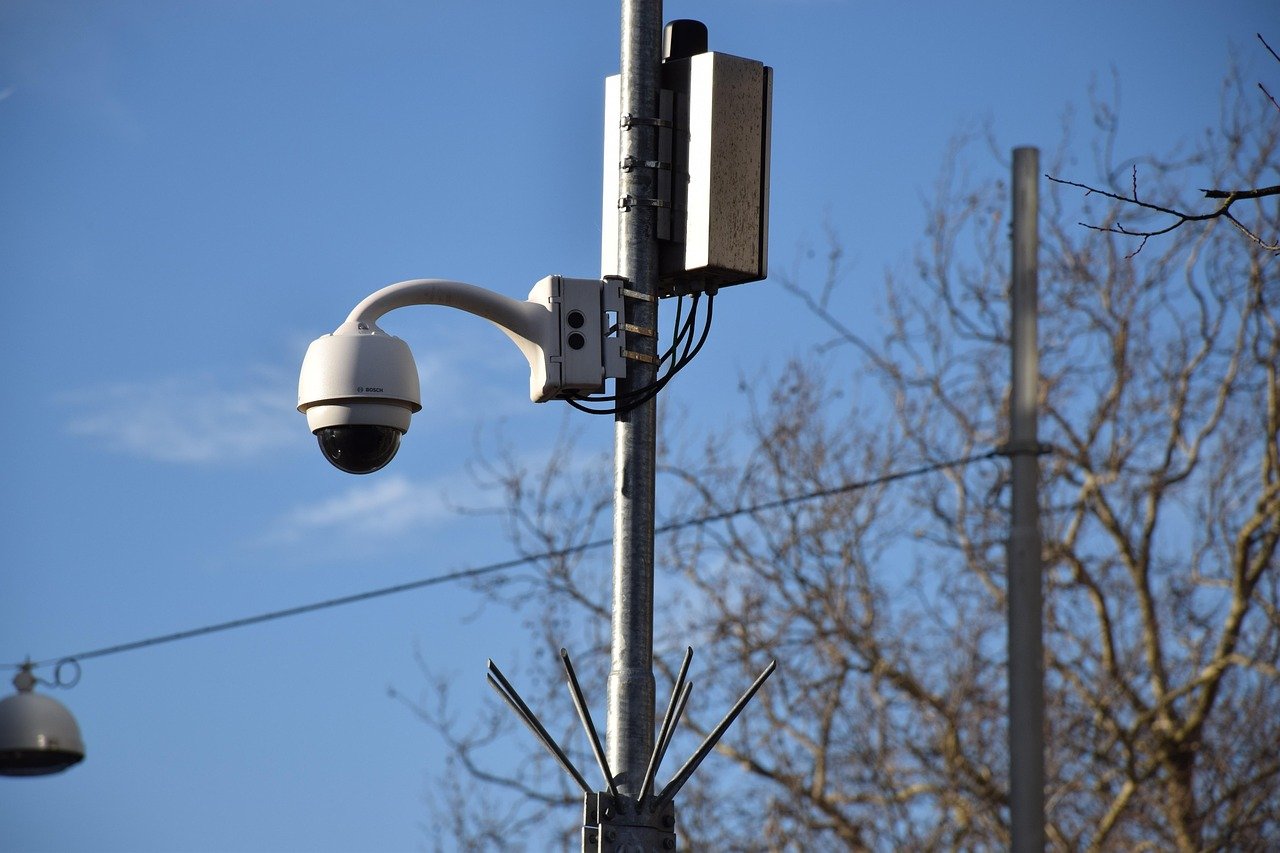
The camera at the edge of town was sold to your council as a car-theft tool. Its audit records show it has spent years answering a different question – where somebody was born, and whether federal agents want to know where they have been. Most of the people living under those cameras found out from a public-records request, not from the meeting where the purchase was approved.
Local and state police ran more than 4,000 lookups in Flock Safety’s nationwide licence-plate network on behalf of U.S. Immigration and Customs Enforcement – some requested by ICE directly, others handled at the behest of federal agencies or as informal favours to them (404 Media). The audit records, released through public-records requests, describe federal access to a national movement database through a side door that never needed a contract, a vote, or a note to the driver whose plate came back. That is the design working as sold: a camera bought to find stolen cars, quietly answering immigration questions instead.
Flock’s readers sit in more than 5,000 American communities, and the AI-mekna vendor behind the network runs upward of 120,000 of them nationwide (ACLU). Every plate that passes is photographed, located and time-stamped, and because the database is shared among agencies, a department that bought a handful of cameras for car theft can search a movement file assembled from everybody else’s streets.
The receipts are not theoretical. They are names, summonses and jail cells.
Chrisanna Elser – A $25 Package, a Month of Tracking, and a Summons Nobody Has Apologised For
Elser lives in Columbine Valley, Colorado, a town small enough that a felony accusation travels. In September 2025 a police sergeant concluded she had stolen a $25 package. The licence-plate network logged her movements for nearly a month, a criminal summons followed, and by her account an officer treated the case as certain rather than probable (Gizmodo; NewsNation). She is suing both the department and Flock.
Look at what the camera actually contributed. It did not witness a theft. It recorded a plate in a place at a time and let software attach that plate to a person, and the officer who trusted the output supplied the certainty. A month of a woman’s life became a criminal case over twenty-five dollars, because a system that cannot know who is behind the wheel was asked a question only a witness can answer.
Every wrongful accusation in this file has the same architecture. The network supplies the lead, a human supplies the conviction, and nobody upstream ever has to be wrong out loud.
Garrett Langley – Admitting the Mistake in August Does Not Cover the Year the Safeguard Was Optional
Flock knew the network could be abused, because it built a tool to catch the abuse. The misuse-detection system was free from April and strictly optional, and only about a third of the agencies using Flock switched it on before the company made it compulsory (Ars Technica). Flock’s chief executive has since said plainly that the company got it wrong and that the requirement should never have been a choice – an admission with a date on it, and the date is late.
The Washington Post has already documented a pattern of officers using this network to watch former partners, which means the case for the tool was public before it became mandatory. Shipping a guardrail as an option and then calling it universal is a familiar move: the feature ships, the announcement ships, and the two thirds of departments that never switched it on become a footnote nobody reads.
Voluntary safety is not safety. It is a product tier.
The ACLU – A Guardrail the Vendor Grades Itself Is a Press Release With a Log-In
The ACLU’s position is that the fix is unproven. The civil-liberties group says there is no evidence the audit tool performs consistently and argues it may be presentational rather than protective, which is why it wants an independent evaluator instead of a vendor’s own report (ACLU). That demand is the whole argument in one line. Whoever builds the surveillance should not also grade the apology.
The tool does work sometimes, which is the problem. One Georgia sheriff’s office ran it and arrested three of its own deputies who had separately been using the camera network to follow people they knew. Three officers caught by a safeguard their employer had voluntarily switched on is not a success story. It is a measurement of how much misuse goes unrecorded in every department where the switch stayed off – and evidence that the only audit to catch a bad search so far was written by the company selling the search.
The containment worked exactly where somebody had agreed to install it.
Henrico County – Two Weeks From the End of the Contract, It Chose the Public Anyway
The clearest sign this is a political decision rather than a technical one is that some places have simply stopped. Henrico County, Virginia – the largest county in its region to act – cancelled its Flock agreement months early, with the contract due to run to November 14. Supervisor Roscoe Cooper’s stated reasoning was that ending it was the right call for residents (VPM News). Communities in Massachusetts, including Milton, along with towns in Texas and Michigan, have ended or refused contracts of their own.
Follow the money in that. Every cancelled contract is public money spent to install a network and then spent again to unwind it, and the officials signing the exit are doing so because their constituents found out what had been bought on their behalf. The pressure is not arriving from a regulator. It is arriving from people who read the contract.
Cameras that get taken down are the only audit this industry has ever failed.
Everyone Else – Your Plate Is Already in the File, and the Only Question Left Is Whether You Knew
Elser is not an outlier; she is the case that found a lawyer. Hugo Parra spent nearly a month in jail over an attempted carjacking he did not commit, five miles from a crime scene he was never connected to. In Louisiana a camera flagged a car and state troopers arrived at a woman’s door over a fatal hit-and-run – wrong vehicle, case collapsed on a second look. In Scotts Bluff, Nebraska, Tim Esterdahl was pulled over because the system misread a test vehicle’s plate. The Electronic Frontier Foundation has been logging these for years, including a reader that turned a 3 into a 7 and ended with guns drawn (EFF).
None of those people agreed to sit in a national movement database. None of them were told when their plate was logged, searched, or handed to another agency. The only thing standing between them and a case number instead of a person was a records request, a lawyer, or a second look somebody decided to take.
What the search data says is that most of the public is still asking the first question about this technology: what is it, and is one near me? Both answers are checkable. Your town’s contract with Flock is a public record, the camera locations are mapped, and the log of who searched your plate can be requested by name. That information exists because somebody has to be able to ask for it. The reason to ask now is that the file is already full – the only person still in the dark is the one being followed.
Sources: 404 Media, Ars Technica, VPM News, Gizmodo, NewsNation, ACLU, EFF.