
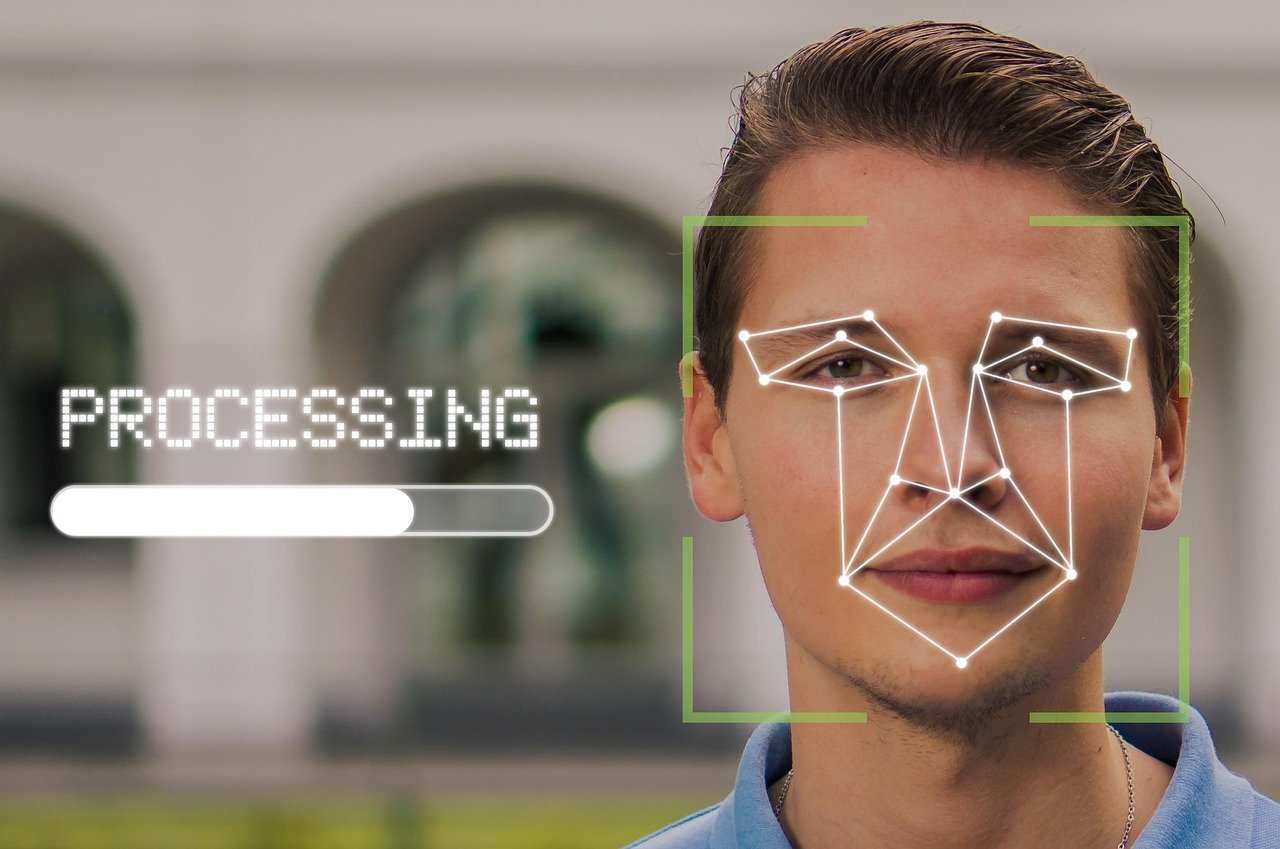
Facial recognition is on the Mobile City Council agenda this month as a $67,000 line item, and the department asking for it has ruled that three ordinary questions are none of the public’s business: how many searches officers run in a year, how a match gets verified before somebody is named a suspect, and whether anyone audits the results. Forty law enforcement agencies get the software. The people who live in Mobile get a database of more than 100 billion faces pointed at them and no way to learn whether theirs came back in a search. A city can buy that arrangement. It should not be able to buy it quietly. All About Cookies
The item before the council is an annual renewal of Clearview AI for the Gulf Coast Technology Center, the regional law enforcement hub the city runs. Mobile police say the center represents more than 40 local, state and federal agencies, which makes this one vote the front door for a very large number of investigators touching one face database. NBC 15
Clearview’s product works the way the name suggests. An investigator uploads a photograph, and the service returns images of people who look similar, plus links to where those images were published. The company describes its holdings as the largest known facial network in the world, assembled from public websites, news pages, mugshot repositories and social media. It says the tool is used after a crime has happened, not for live tracking, and it advertises accuracy above 99 percent across demographic groups. Clearview AI
Blake Brown — “Operational Security” Is the Answer You Give When the Answer Is Bad
Blake Brown, public affairs manager for the Department of Public Safety, told NBC 15 that certain software items on the agenda could not be discussed because they are a matter of operational security. That covers every question worth asking. Not the volume of searches. Not the verification step between a possible match and a named human being. Not the existence of an audit log.
There is a version of this where the refusal is defensible: naming the exact vendor of a wiretap tool would tip off the people being investigated. A facial recognition contract is not that. The number of times a police department searched a photo database last year tells a suspect nothing he could act on, and it tells the council everything it needs to decide whether the renewal is worth $67,000. Refusing to answer is not protecting an investigation. It is protecting a procurement. A department that cannot say how often it uses a tool has not measured whether the tool works.
Facial Recognition for 40 Agencies — the Paper Trail Was Built and Nobody Will Say Who Reads It
Here is the part the refusal cannot cover. Clearview’s own public materials describe the compliance plumbing it sells alongside the search: an intake form requiring a case number and a crime type before every search, an assigned administrator per agency who can review the organization’s search history, and usage reports that can be exported to justify spending and to detect improper queries. Clearview AI
So the records exist. Somewhere in a dashboard, in a file, generated automatically every time someone types a case number and presses search, there is a count. There is an administrator with the access to read it. The city has not said whether anyone has. Forty agencies sharing one contract, and the only published fact about how it gets used is that the city would rather not say.
Mobile — $8,495 a Year Became $67,000, and the Explanation Got Shorter
The invoice history is the tell. City invoice records show $8,495 on February 15, 2023, another $8,495 on April 28, 2023, $8,495 on March 12, 2025, and $9,995 on March 5, 2026. The renewal now before the council is $67,000, which is nearly seven times the most recent entry and the largest number in the file by an order of magnitude. The city has not explained the jump. All About Cookies
Pricing changes are normal. Unexplained sevenfold pricing changes attached to a service the buyer will not describe are how a public safety budget stops being public. The council is being asked to approve a number that its own records do not support, for a capability it is not allowed to characterize, on a tool whose use it cannot audit. That is not oversight. That is a signature.
A’Niya Robinson — Even a Perfect Match Would Still Be Surveillance of the Innocent
A’Niya Robinson, policy director at the ACLU of Alabama, makes the argument that survives every accuracy claim in the brochure: if the system worked flawlessly, it would still hand police and governments the ability to watch ordinary Alabamians as they move through their days, and the person whose face is analyzed never gets asked and never finds out. She calls it what it is, general suspicionless surveillance. NBC 15
The accuracy claim deserves its own skepticism. At least seven people in the United States have been arrested on facial recognition matches that turned out to be wrong, among them Robert Williams, held in Detroit custody for roughly 30 hours over a robbery he had nothing to do with. All About Cookies
Every one of those cases began as a lead. A lead is a question, not an identification, and the difference between the two is a human being deciding to keep checking. Mobile will not say who does that checking, or whether the department can prove it happened. In a city of that size with 40 agencies in the pipeline, the failure mode is not exotic. It is one tired detective on a Thursday treating a ranked list of lookalikes as a list of names.
Alabama — Paying Clearview Since 2019, Disclosing Since Never
Mobile is not the state’s first customer. Alabama Law Enforcement Agency has been paying Clearview AI since December 2019, and by 2021 reporting had already put roughly $200,000 through the agency in two years while ALEA declined to produce the contract or answer questions about it. ABC 33/40 The pattern is five years old and it is consistent: buy the capability, disclose nothing, renew.
Other states have at least built exits. Vermont’s attorney general sued Clearview in 2025 over biometric collection, and a judge dismissed it that December for lack of jurisdiction, which is a ruling about where to sue rather than about whether the conduct was acceptable. The 2022 settlement of the ACLU’s Illinois case produced something more useful: residents of that state can ask the company to block their facial data from search results. NBC 15 Alabamians have no equivalent, which means the only people with a working objection to being in the database are the ones who live somewhere else.
Axel’s Take — The Audit Exists, the Questions Don’t, and the Invoice Is the Only Confession
Set the politics aside and look at the shape of the thing. A vendor sells leads and says, on its own website, that every search requires a case number, that every agency gets an administrator who can read the history, and that usage can be exported for review. A department buys the leads and refuses to say whether anyone reads the history. A council approves the price without asking for the export. The public gets the bill and none of the file.
That is the whole architecture, and it is not an accident of secrecy. It is what happens when a surveillance capability is procured as software rather than debated as policing. The word “software” does the work, because software gets an agenda line and a signature, while policing gets a hearing.
The fixes are unglamorous and cheap, which is why they keep not happening. Publish the annual search count as a council attachment. Publish the audit summary, redacted for case details, because the audit already exists in a dashboard. Require every facial recognition match to be confirmed by a second investigator and documented before an arrest. Report each mistaken identification to the council, in public, with the cost of the detention attached. And make the vendor’s intake record the actual warrant-adjacent standard: a case number is not probable cause, it is a form field.
None of that requires new research or a better model. AI-mekna as a category is not the problem here. The problem is older than any model: a purchasing decision dressed up as an operational secret, approved by people who were told not to ask, paid for by residents who were never told anything at all. Mobile’s council can read the invoice. It can ask for the export. The only thing standing between the city and an answer is a vote it has not taken yet.
Sources: NBC 15, All About Cookies, ABC 33/40, Clearview AI.